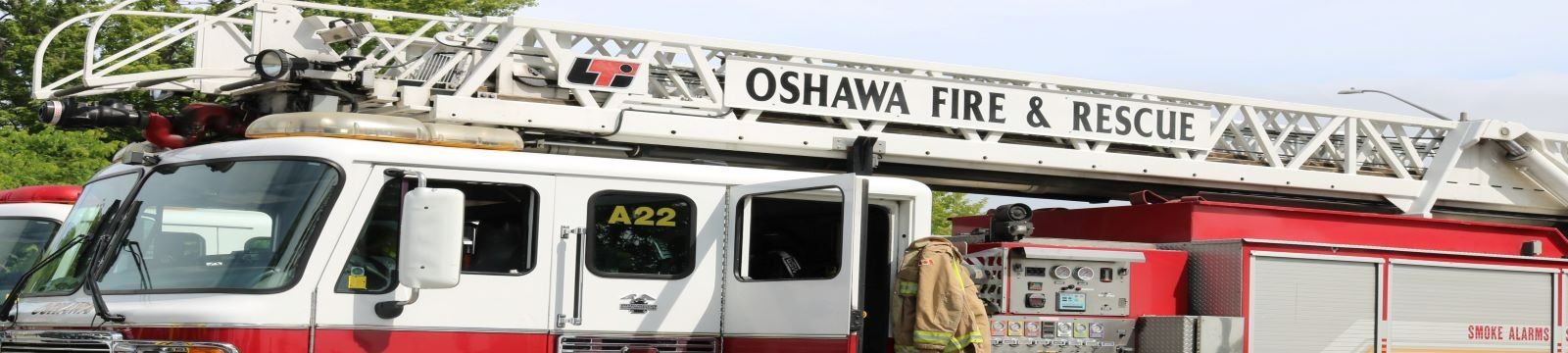
City of Oshawa Emergency Planning information
The City of Oshawa in conjunction with the Region of Durham, have developed a comprehensive Emergency Plan to deal with natural and man-made disasters.
In the event of an emergency, the city web page will be continuously updated to provide information for the public.
Please review the following information to be prepared in case an emergency situation arises.

- Emergency preparedness planning
- Create an emergency plan
- Important Numbers
- Communication during an Emergency
- Emergency preparedness checklist
- Evacuation
- Survival Kit
- Vehicle Emergency Kit
- First aid kit
- Water
- Food
- Carbon Monoxide
- Cold Weather Conditions
- Generators
- Coping with Stress
- Lightning Storms
- Tornados
- Winter Storms
Emergency preparedness planning
Planning in advance for an emergency can save time and save lives. Discuss the dangers of fire, severe weather, and other emergencies with everyone in your home, compile an emergency plan and post it where everyone can see it.
Create an emergency plan
Call Oshawa Fire Services, provincial emergency planning office, or federal emergency planning office:
- find out what kinds of disasters could strike your area
- ask how to best prepare for a disaster
- how will you be warned of the emergency?
- ask about special assistance for the elderly, disabled
- ask your workplace about emergency plans
- learn about emergency plans for your children's school, daycare
Important Numbers
Fire, Police, Ambulance:
- 911
Gas Company:
- Enbridge Consumers Gas: 1 (866) 763-5427
Electric Company:
- Oshawa Public Utilities: (905) 723-4623
- Hydro One: 1 (888) 664-9376
Water/Sewer Company:
- Durham Region: (905) 655-3344 & after hours (905) 576-9991
Information Centre:
- City of Oshawa: (905) 436-3841
Communication during an emergency
During an emergency, warnings, updates, or other information may be broadcast on local radio and television stations. Instructions may also be delivered personally by emergency personnel or telephoned by automated dialing equipment. Having a battery-powered radio with a supply of fresh batteries is essential in the event of a power outage or evacuation.
Weather information can be obtained on the television Weather Network (Rogers Cable 23) or the Weatheradio network at 162.4 MHz (requires special VHF-FM radio).
For more information on planning for emergencies, please call the City of Oshawa Fire Services at (905) 433-1238 or fax them at (905) 433-0276.
Further information can be found at www.getprepared.ca
The Canadian Red Cross has emergency preparedness information at www.redcross.ca
Emergency preparedness checklist
- Post emergency telephone numbers prominently in your home. Teach your children how and when to call for help. In Oshawa, 911 is used to call for police, fire and ambulance. Remember to use 9-1-1 only in a true emergency. When you call 9-1-1, be prepared to state the nature of the emergency, what emergency service is needed where it is needed and who you are. Stay on the line and follow the instructions of the emergency operator.
- Do not use the telephone during or after a disaster unless it is absolutely necessary. Emergency services will need all available telephone capacity. Non-emergency calls may overload the telephone system.
- In a fire or other emergency, you may need to evacuate your home within seconds. Thus, develop an emergency escape plan and practice it often with your family.
- In a disaster, ordinary items in the home can cause injury and damage. Anything that can move, fall, break, or cause a fire is a potential hazard. Hazard-proof your home by securing shelves and placing large, heavy objects on lower shelves. Hang pictures and mirrors away from beds. Store flammable products away from heat sources. Strap the water heater to wall studs. Repair defective electrical wiring and leaky gas connections. Clean and repair chimneys, flue pipes, vent connectors and gas vents.
- Learn first-aid and CPR. Courses are available through the Canadian Red Cross, St. John Ambulance and other community agencies.
Evacuation
If you must leave your home due to a power failure:
- Turn off the main electrical switch.
- Turn of the main water & gas valves.
- Open the faucets and flush the toilets to drain the water system during freezing weather.
- Listen to your radio for emergency instructions.
- Call a plumber or furnace technician to check your systems before restarting them.
Survival Kit
Prepare an emergency survival kit for each member of your family and keep it in a convenient place near an exit. The kit should contain:
- first-aid supplies and necessary medication including prescription medication
- extra eye glasses
- candles and matches or a lighter (not for children)
- non-perishable, ready to eat, nutritious foods that you like
- drinking water - at least one litre per person, per day
- a blanket or sleeping bag for each person
- a change of clothing and footwear suitable for the weather
- rainwear
- a flashlight and battery-powered radio and extra batteries for both
- extra keys and cash
- copies of important papers and phone numbers and recent photos of family members
- toilet paper and other personal supplies
- a manual can opener and bottle opener
- equipment such as cutlery, disposable dishes, a utility knife and garbage bags
- a whistle (in case you need to attract attention)
- playing cards, small games
The kit should sustain each person for at least three days. Keep the kit in a backpack or duffel bag that can be easily carried. Check the kit periodically and replace the products whose "best before" dates have expired.
In a serious emergency, you may be asked to leave your home. Lock your house, leave immediately and take your emergency survival kit with you. Wear protective clothing and footwear. Listen to a radio or television for the location of emergency shelters and follow instructions including routes specified by local emergency officials.
Have an established meeting place and message point for members of your family who may become separated during an emergency. Consider a family friend or relative in a nearby community. If you go to an evacuation centre, register there so you can be located and accounted for.
Keep your vehicle gas tanks at least half full at all times in case you have to evacuate and gas is not available.
Vehicle Emergency Kit
Have an emergency kit in each vehicle. This kit should contain:
- ice scraper and brush
- shovel
- sand or kitty litter (the non-clumping kind)
- blanket
- tow chain
- warning light or flares
- flashlight and batteries
- fire extinguisher
- Tool Kit.
- booster cables
- first aid kit
- road maps
- Battery or solar powered radio
- Traction mats
- Compass
- Cloth or roll of paper towels
- Extra clothing and footwear
- Emergency food pack
- Axe or hatchet
- Water Proof Matches and a ‘survival’ candle in a deep can (to warm
- hands, heat a drink or use as an emergency light)
- Methyl hydrate (for fuel line and windshield de-icing)
- Blanket (special ‘survival’
- blankets are best)
First Aid Kit
Assemble a first aid kit for your home and car in the event of an emergency. A first aid kit might include:
- sterile adhesive bandages in assorted sizes
- 2 inch sterile gauze pads (4-6)
- 4 inch sterile gauze pads (4-6)
- hypoallergenic adhesive tape
- triangular bandages (3)
- 2 inch sterile roller bandages (3)
- 3 inch sterile roller bandages (3)
- scissors
- tweezers
- needle
- moistened towelettes
- antiseptic
- thermometer
- tongue blades (2)
- petroleum jelly
- safety pins, assorted
- cleaning agent\soap
- latex gloves (2 pairs minimum)
- sunscreen
- aspirin or nonaspirin pain reliever
- Syrup of Ipecac (to induce vomiting if advised by Poison Control Centre)
- activated charcoal (if advised by Poison Control Centre)
- eyewash
- antibiotic ointment
Contact a local first aid\CPR organization to obtain a basic first aid\CPR manual.
Water
Water is absolutely necessary for your survival. Stocking water reserves and knowing how to purify contaminated water should be one of your first priorities. You should store at least a three day supply of water for every member of your family. Children, nursing mothers and the ill will require more water than an average person. Additional water will be required for food preparation and hygiene.
Even if your supplies run low, water should never be rationed. You can minimize the amount of water your body needs by reducing activity and staying cool.
Water storage
Water can be stored in clean plastic, glass, fibreglass or enamel-lined containers - never use a container that previously held a toxic substance.
Before water is stored it needs to be:
- treated with a preservative such as chlorine bleach to prevent growth of microorganisms
- chlorine bleach with 5.25 per cent sodium hypochlorite (and no soap) can be used
- four (4) drops of bleach per quart of water should be added, and then stirred
- seal water containers very tightly and store in a cool, dark place
Hidden water sources
If an emergency strikes and leaves you without a stored supply of clean water to drink, there are some other indoor water alternatives:
- Ice cubes
- Ice cube trays can hold several glasses of potable water.
- Hot water tank Water contained within your hot water tank can be used in an emergency, however first make sure that the electricity or gas is shut off. Open the drain at the bottom of the tank. Start water flowing by turning off the water intake valve and turning on a hot water faucet.
Remember: do not turn the electricity or gas back on when the tank is empty. Also, know the location of your incoming water valve. If there are reports of broken water and sewage lines you will need to turn this valve off to hinder contaminated water from entering your home. - Plumbing water To use this source of water, let air into the plumbing by opening the highest faucet in your home and draining the water from the lowest one.
- Toilet reservoir tank (a last resort) Water stored in the reservoir tank must be purified first before drinking. See water purification.
- Waterbeds (also a last resort) A waterbed can hold up to 400 gallons of water, however, some may contain toxic chemicals that cannot be removed by many purifiers. If a waterbed is a designated resource, drain it annually, refill it with fresh water containing 2 ounces of bleach for every 120 gallons.
- For more tips on water . . . visit the Federal Emergency Management's website.
If you suspect that your drinking water supply is contaminated:
- Bring water to a boil for 10 minutes. Or
- Add 5 drops of chlorine bleach to 4.5L of clear water and let stand for 15 minutes. Or
- Add 10 drops of chlorine bleach to 4.5L of cloudy water and let stand for 30 minutes.
Food
When less active, healthy people can survive on half of their usual food intake for a period of time, and without food at all for a few days. Food, unlike water, may be rationed safely, except for children and pregnant women.
To prepare an emergency food supply you can rely on many of the same foods you already eat: canned foods, dry mixes, etc. Canned foods don't require cooking, water, or special preparation.
You should aim to supply an emergency food stockpile that will keep your family self-sufficient for up to three days.
What do you need?
- canned soups and stews
- canned baked beans and other vegetables
- canned meats, fish, and poultry
- canned fruits
- crackers and biscuits
- honey, peanut butter, syrup, jam, salt and pepper, and sugar
- instant coffee and tea
- powdered milk
- cans or cartons of juice
- specialty infant foods and formula
- vitamins, minerals, protein supplements
- hard candy, chocolate bars
- cocoa
- non carbonated soft drinks
- rice, pasta
- canned pasta sauces
- knives, forks, spoons
- disposable cups and plates
- manual can opener, bottle opener
- fuel stove and fuel (follow manufacturer's instructions - never use a barbecue indoors)
- waterproof matches
- plastic garbage bags.
Storage tips
- keep food in a dry, dark, and cool spot in your home - not above 21º Celsius and not below freezing
- keep food covered at all times
- keep perishables (i.e. crackers) in airtight containers or bags
- packages of sugar, dried fruits, and nuts should be emptied into screw-top jars or containers in order to avoid pests
- inspect all food containers for spoilage.
Shelf life of stored foods
- rotate your stored foods
- check the best before dates
- use foods before they go bad and replace them with a fresh supply
- date foods with a marker
- stored foods should be of the highest quality possible
- inspect reserves periodically for broken seals or dented containers
- during the emergency, use perishables from your refrigerator first, freezer second, and finally non-perishables.
How to cook if the power goes out
- for emergency cooking you can use a fireplace, or a charcoal grill or camp stove - outdoor use only
- food can be heated with candle warmers, chafing dishes, or even fondue pots
- canned food does not require to be cooked
- make sure your family members eat at least one nutritionally balanced meal per day
- drink enough liquid to enable your body to function properly
- consume enough calories to allow you to do necessary work.
Refrigerated Food:
- Without power, a completely full chest freezer will keep everything frozen for about 2 days if kept closed.
- A refrigerator will keep food cool for 4-6 hours.
- "Remember, if in doubt, throw it out!"
Carbon Monoxide
Carbon Monoxide can kill you before you even realize what is happening.
- You cannot smell, see or taste carbon monoxide.
- Gas-fueled appliances produce carbon monoxide.
- Do not use BBQ's, gas generators or other gas-fueled appliances inside your home.
Cold Weather Conditions
- Hypothermia occurs as a result if over-exposure to cold.
- Individuals with symptoms of severe shivering or in later stages, lack of shivering, must be kept warm and taken to the hospital immediately.
Protect yourself from extreme cold by wearing many layers of clothing
Generators:
- Follow manufacturer's safety instructions.
- Never plug a generator into the regular electrical outlet in your home.
- Portable generators should not be directly hooked into home wiring unless specifically wired for this purpose.
- Gasoline generators give off deadly fumes. The unit's exhaust must be vented outdoors (not in your garage). The carbon monoxide fumes can kill you very quickly.
Coping with Stress
- Disasters affect our Personal well being.
- Disaster situations create stress for everyone. Your feelings are normal and understandable under the circumstances.
- Expect the incident to bother you.
- Maintain good eating habits and exercise.
- Take time for leisure activities.
- Remind yourself that your reactions are normal.
- Spend time with family / friends.
- Get extra help, if necessary.
Lightning storms
Lightning occurs when air becomes charged with electricity during a thunderstorm. Bolts of lightning strike the ground at approximately 40,000 km per second! Though it appears that the lightning is a single bolt with a few forks, the opposite is true. The main bolt is actually many series of lightning strikes which all follow the same path. The human eye is unable to distinguish the separate bolts because of the speed of the strikes.
During a lightning storm, it is important to stay indoors. Keep away from windows, doors, fireplaces, radiators, stoves, metal pipes and sinks and other electrical conductors. Unplug electrical appliances and do not use a telephone or other electrical equipment.
If you find yourself outside during an electrical storm, seek shelter in a building, cave, or depressed area. If you are caught in the open, crouch down low with feet close together and your head down (leap frog position). Do not lay flat - this will help to minimize contact with the ground and reduce the risk of electrocution from a ground charge. Stay away from telephone and power lines, fences, trees and hilltops.
Note: To estimate how far away lightning is, count the seconds between the flash of lightning and thunderclap. The sound created by a lightning bolt travels at approximately 300 metres a second. If your count is less than five seconds, take shelter immediately.
Tornados
What is a tornado?
A tornado is a violent windstorm characterized by a twisting funnel-shaped cloud that forms at the base of cloud banks and points toward the ground. They move over the ground at approximately 20 - 90 km/h and often travel from southwest to northeast.
They are erratic and often change direction suddenly. May to September are the prime months for tornadoes, and they normally strike during the afternoon or early evening. Canada's high risk areas are southern Ontario, Alberta, southwestern Quebec, and a band of land stretching from southern Saskatchewan and Manitoba to Thunder Bay, Ontario. There are also tornado zones in B.C. and western New Brunswick.
Signs of a tornado
Tornadoes form suddenly and are often preceded by warm, humid weather. They are always preceded by a thunderstorm. Warning signs include:
- severe thunderstorms with frequent thunder and lightning
- an extremely dark sky sometimes accompanied by green and yellow clouds
- a deep rumbling sound similar to a freight train
- a whistling sound similar to a jet airplane
- a funnel cloud at the rear base of a thunder cloud that may be behind a curtain of rain\hail
Where do I go in a tornado?
- listen to a radio for emergency information and take cover - if you live in a house, take shelter in the basement
- you can also go to a small interior ground floor room such as a closet or bathroom - stay away from windows and outside walls or doors
- if you are in an office or apartment building, take shelter in an inner hallway or room. Do not use elevators
- avoid buildings such as churches, auditoriums, and other buildings with freespan roofs (there is no support in middle. Thus, they could collapse if the tornado hits them)
- avoid cars and mobile homes (more than 50% of all deaths during tornadoes occur in mobile homes)
- if you are driving when you spot a tornado, try to get to a nearby shelter
- if the tornado is too close to seek shelter, get out of your car and find a low-lying area (such as beneath an underpass of a highway) - crawl up the bank to just under the road or overpass
- Always remember to get as close to the ground as possible, protect your head, and watch out for flying debris
Winter storms
Most Canadians rely on electrical power. Sleet and freezing rain may damage power-lines and cause power outages that may last from several hours to a few days. An extended loss of power during the winter months can result in cold, damp homes and challenging living conditions.
Consequences of power loss can be minimized by taking several necessary precautions. Homeowners can protect their homes against frost damage by installing standby heating systems that permit continued occupancy throughout a winter storm emergency.
Precautions
- homeowners with fireplaces should maintain an accessible supply of fuel
- install a nonelectrical standby stove\heater (approved by the Canadian Standards Association or certified by the Canadian Gas Association)
- keep flashlights, lanterns, matches, and candles stored in an accessible location for adults and inaccessible to children
- check with your local electrical supply authority before arranging the installation of an emergency generator for furnaces, appliances or lighting
- keep a battery-powered radio and spare batteries available for emergency announcements
- if you go outside during a winter storm, dress appropriately (several layers of loose-fitting, lightweight, warm clothing)
- conserve fuel if necessary by keeping your home cooler than normal
- avoid travel if possible - if you must travel, do so during the day
What to do when your electrical power fails
- check to see if it is only your home affected; if so, contact your local electrical supply authority
- turn on your battery-powered radio for information updates
- stay calm - even in frigid temperatures a home with doors and windows shut will not become too cold for a few hours
- if you have a backup heating source, turn it on
When your home must be abandoned
- turn off the main electrical switch
- turn off the water main where it enters your home
- protect the valve, inlet pipe, and meter or pump with blankets or insulation material
- drain the water from your system beginning at the top of the house - open all taps and flush toilets several times during freezing weather (small amounts of water trapped in horizontal pipes will not cause damage)
- add glycol or antifreeze to water remaining in toilets so that it does not damage your pipe system
- open the drain valve usually located in the basement
- drain your hot water tank by attaching a hose to the tank drain valve and running to a floor drain or sink
When power resumes
- turn your power switch back on if your home was abandoned
- turn on your water supply - close lowest valves first and allow air to escape from upper level taps
- fill your hot water heater with water prior to turning it back on
- warm your home back up slightly warmer than normal for a few hours to allow it to thoroughly dry
- inspect your food supplies in refrigerators, freezers and cupboards for spoilage
After the storm
- immediately report downed power-lines and broken gas-lines
- inspect your home for any physical damage
- check on neighbours, especially older adults and those with special needs
- beware of overexertion and exhaustion - shoveling snow in extreme cold can cause heart attacks - pace yourself
Information adapted from:
Emergency Preparedness, Health Canada.
Canadian Red Cross