
Fire Services


If this is an emergency, dial 9-1-1. Do not wait.
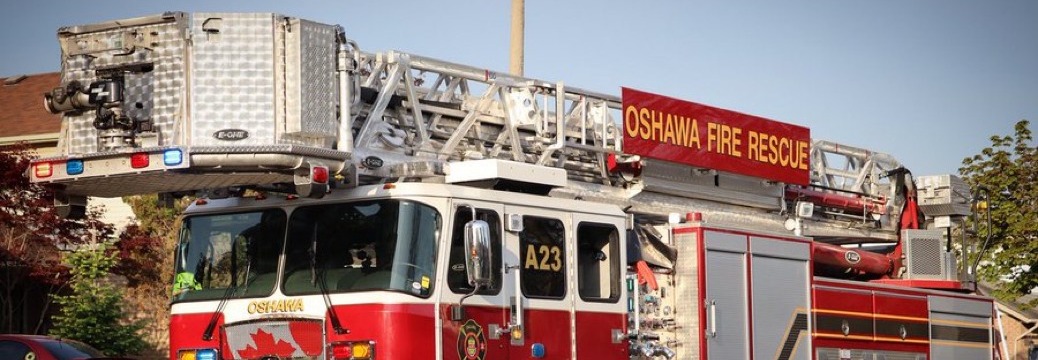
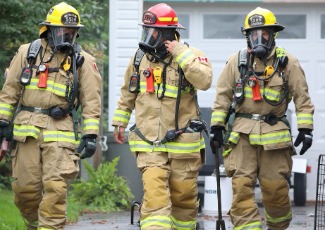
Oshawa Fire Services (O.F.S.) provides the highest level of life safety and property protection to our community. We are proud of the men and women who work for O.F.S. and the skills and services they provide daily.
Our Services
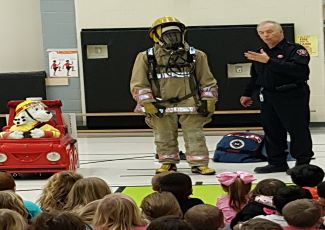
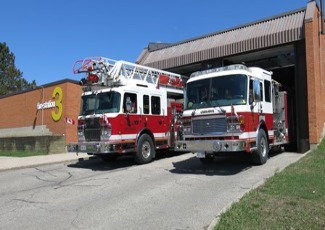
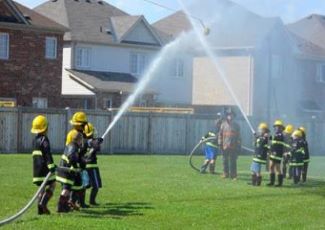
.jpeg)

Mission Statement
Oshawa Fire Services mission is to promote and protect the health and well-being of the community through adaptable and progressive education, prevention and, emergency services.
Oshawa Fire Services Vision
To continually pursue and advance a level of professional excellence recognized as the model for the fire service.
History
Our History |
The Founding of Oshawa Fire Services (1856-1868)Oshawa Fire Services began on February 4, 1856, as a volunteer department established by By-law 33, under Chief Engineer Mr. P. Thornton. The department's first piece of equipment was a hand-operated pumper cart, marking the start of an organized fire response in the town. Chief P. Thornton was succeeded by leaders such as Robert Strong, James Pellow, and John Mellows, the last of Oshawa’s volunteer Fire Chiefs (then known as “Chief Engineers”).
Establishing a Full-Time Department (1868 - 1924)By-law 142 incorporated the Oshawa Fire Department as a full-time service on July 20, 1868, with Patrick Thornton as the first full-time Chief. At this time, the department comprised 50 men in the Fire Company and an additional 15 men in the Hook and Ladder Company, as well as one engine, ladders, and hose lines. In 1875, Chief Thornton secured a Ronald Steam Pumper from the United States, which replaced the hand pumper, and water was sourced from storage cisterns around the village. A new town hall was built in 1877 at the southwest corner of Duke (now Richmond) and Simcoe Street North, partially serving as a fire station.
Ronald Steam Pumper Motorization and Leadership Changes (1905 - 1927)By 1905, John Kellow served as Chief, overseeing 20 volunteer firefighters, including officers. Four volunteers were required to sleep at the station to ensure readiness. In 1916, Chief Angus Cameron took command and acquired the department’s first motorized fire apparatus, a Chevrolet Hose Tender. Chief Cameron continued his role as Oshawa grew into a city in 1924. In January 1926, he welcomed four full-time permanent firefighters, and R.S. McLaughlin, founder of General Motors Canada and an Oshawa resident, gifted the department a new Bickle-equipped GMC Fire Pumper. A turning point occurred in 1927 when the Oshawa Fire Brigade resigned en masse, paving the way for a professional, full-time force. A New Era: Transition to a Permanent Force (1928 - 1939)In January 1928, Chief Cameron retired, succeeded by Chief Wesley R. Elliott, who expanded the department to 16 men and phased out the volunteer service over the next two years. Chief Elliott introduced vital upgrades, including a GMC Bickle Pumper, a Chevrolet chemical and hose truck, and an assortment of hoses. In 1930, the department received a new ladder truck equipped with 412 feet of various-length ladders. Under Chief Elliott’s guidance, Oshawa Fire Services implemented a comprehensive Fire Prevention program that earned recognition from the Province of Ontario. He also replaced the outdated rubber helmets with leather helmets and added two all-service gas masks, and in 1934 acquired a Chevrolet Chassis with a 100 GMC Bickle Pump. By 1937, Oshawa had its first Chief’s car, and in 1939, an 800-gallon Bickle Pumper was introduced.
Expansion of Infrastructure and Services (1940s - 1950s)During the 1940s, the department added new pumpers in 1943 and 1944. Until 1946, Oshawa operated with a single station in the downtown area, but in December 1946, a second station opened in the south of the city (Cedardale), built to house three pieces of apparatus and a crew of twelve. A new headquarters on Simcoe Street North opened in 1951, replacing the outdated station in the municipal complex. In 1953, Oshawa Fire Services took on ambulance operations from the new headquarters, managing over 35,000 calls over 20 years. Hurricane Hazel and Growth of the Department (1954 - 1957)One of the department’s most challenging events came on October 15, 1954, when Hurricane Hazel struck Ontario. The department responded to 32 alarms that night, deploying all available equipment, with no fatalities recorded. Chief W. R. Elliott retired in August 1955, and Chief H. R. Hobbs succeeded him. Under Chief Hobbs’ leadership, Station 3 opened on Somerville Street in 1955, and the department grew to 96 firefighters by 1957. Chief Hobbs also introduced the innovative firefighting method known as “water fog.” Advancements in Firefighting Techniques and Technology (1960s - 1981)The 1960s brought numerous advancements: the workweek for firefighters was reduced from 48 to 42 hours, the first alarm room cadets were introduced in 1966, and all street alarm boxes were removed in 1967, replaced by a direct hookup alarm board in the Dispatch Centre connecting to factories, commercial units, and medical facilities. Following the untimely death of Chief Hobbs in 1967, Chief E. R. Stacey took command, opening a fourth station named after Chief Hobbs on King Street East and increasing the staff by 24, bringing the department’s total to 159 personnel by 1970. That same year, the Oshawa Fire Department appointed its first Training Officer, Wm. Tweedie. In 1973, Oshawa Civic Ambulance Service operations were transferred to the province, marking the end of an era. By 1981, all four fire halls had been strategically relocated to improve response times and coverage.
The Digital Age and Modernization (1982 - 2000)Chief E. Stacey retired in 1982, and W. A. Forsythe took over, making Oshawa the first fire department in Canada to introduce a computer-aided dispatch system to optimize vehicle response. Chief Forsythe retired in 1985, and Gary J. Hooper was appointed Chief. In 1987, Oshawa mourned the loss of its first firefighter in the line of duty. The 1990s brought further modernization, including the implementation of a new 9-1-1 system, an updated firefighter curriculum, and the establishment of a Communications Division. Chief Milt Wilson succeeded Chief Hooper in 1995 and led Oshawa Fire Services until 2002. |


Oshawa Fire Services Training Tower
The O.F.S Training Tower had its ribbon cutting ceremony on April 14, 2023, and is now officially open for training. The tower is located on the south field of the Oshawa Airport.
This facility was created from modified shipping containers and mimics a four-story building for realistic firefighter training.
It will provide firefighters with a safe environment to practice firefighting techniques and high-angle rescues.
Annual Report
View the accessible P.D.F. of the annual report
| View Past Annual Reports |